
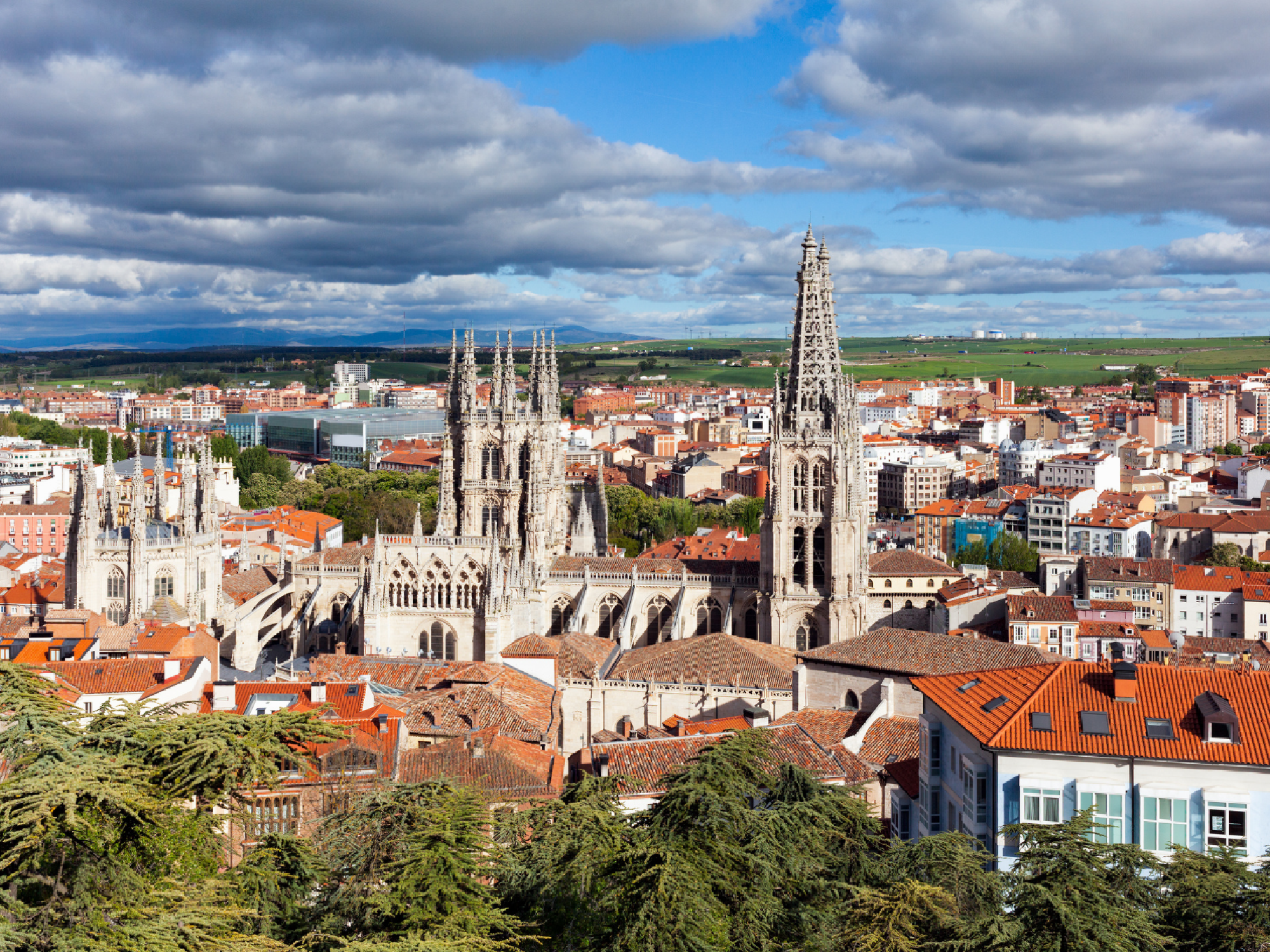
This is Burgos: it offers a wide variety of activities to see and discover.
If you have two days, we suggest the following places to visit:
Address
The first day, we begin the visit in front of the Arco de Santa María, the old city gate conceived as a great triumphal arch welcoming visitors. After passing through it, the majestic Cathedral of Santa María appears, the city’s most emblematic monument. Don’t forget to look at the Golden Staircase, an ingenious architectural feature that connects the temple with the upper quarters of the city.
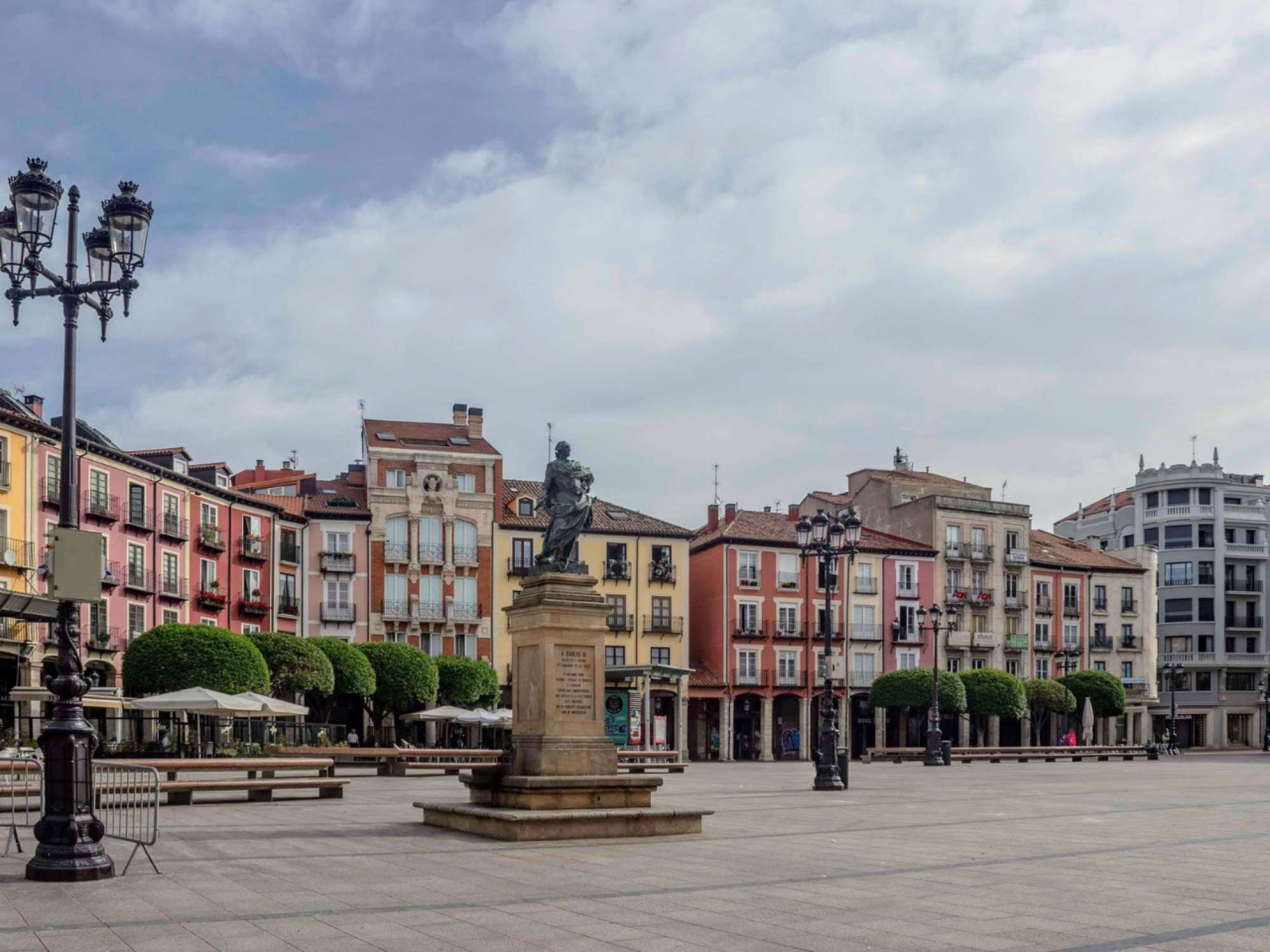
Upon leaving, we go up from Plaza de Santa María to the Church of San Nicolás de Bari. Wandering through the streets, we reach Plaza Mayor, the nerve centre of the city, where the Town Hall is located and where several quiet pedestrian streets lead to numerous and varied shops.
This can be a good moment to stop for lunch or enjoy delicious tapas in the many establishments in the area. Passing under the arches of the Town Hall, you access the Paseo del Espolón, a meeting point for locals and visitors. It is worth strolling leisurely along its entire path, enjoying the uniqueness of its gardens, its numerous trees, and the historic buildings standing along it. Just 3 km from the centre, in the quiet area of Fuentes Blancas, stands the Cartuja de Miraflores. In the surrounding area, you can enjoy one of the city’s largest parks, with picnic areas, children’s play zones, pathways, and more.
The second day, we begin by visiting the Monastery of Santa María la Real de Huelgas. Very close to this monastery is the Hospital del Rey, located on the Camino de Santiago. It was the most renowned hospital of the pilgrimage route under the patronage of the Castilian kings. Fully renovated, it preserves the splendid entrance to the Patio de Romeros, now home to the Rectorate of the University of Burgos. In the area you will find many grill restaurants inviting you to take a break, regain strength, and continue your route with renewed energy. In the coming months, the Museum of Human Evolution (MEH) will open to the public—a unique museum that will allow visitors to learn about the latest discoveries on human evolution.
This afternoon is dedicated to visiting the archaeological sites of the Sierra de Atapuerca (15 km from the city). The visit can start from the town of Ibeas de Juarros (N-120) or from Atapuerca (N-1). Highlights include the Gran Dolina site, where fossils of hominids were discovered that led to the identification of a new human species, Homo Antecessor; and the Sima de los Huesos site, from which the world’s most complete collection of human remains has been excavated (3,000 fossils corresponding to 32 individuals).


