

Gastronomy
The land of good wine, black pudding, roast lamb, and Castilian soup.
Address
Dining in Burgos can be summed up in one phrase: the land of good wine, black pudding, roast lamb, and Castilian soup.
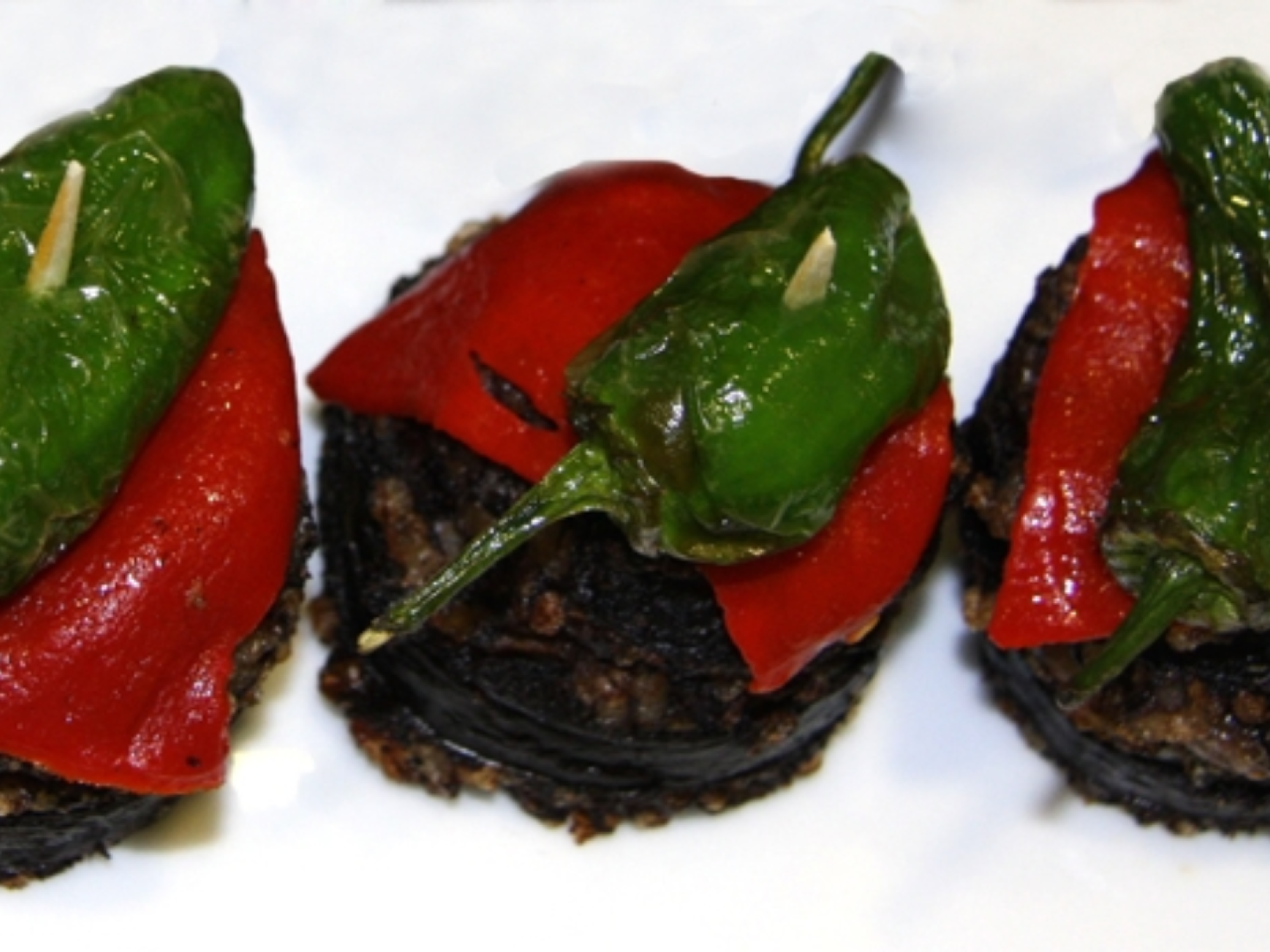
Two typical products are strongly associated with the name of Burgos: black pudding (morcilla) and cheese, both widely known as “from Burgos”.
But Burgos cuisine offers much more. Traditional dishes include roast lamb, Castilian soup, and “olla podrida”, without forgetting fish—especially trout—and game in season. For dessert, classics such as “el postre del abuelo” or curd.
Its pastry is excellent: traditional sweets like yemas de Burgos. All of it best enjoyed with a good Ribera del Duero wine.
Roast suckling pig is a variety of roast made from a young pig (known as “cochinillo”). In Spanish cuisine, it is very popular in Castilla, with the most famous version coming from Segovia. Its popularity extends throughout Aragón and La Mancha. Traditionally baked in clay dishes and served hot, with crispy skin. One of the best pairings when served hot is wine.
Morcilla de Burgos is a staple of Burgos cuisine. Made from pork, it consists mainly of onion, blood, lard, and rice, along with other ingredients. Oral tradition says it must be: “mildly salted, fatty and slightly spicy”.
The vineyards under the Ribera del Duero Designation of Origin are located in Castilla y León (Spain), within a strip along the Duero River basin about 115 km long and 35 km wide, covering parts of the provinces of Soria (19 municipalities), Burgos (60), Segovia (4), and Valladolid (19). It stretches from San Esteban de Gormaz in the east to Quintanilla de Onésimo in the west. At the end of 2005, the vineyards of the area represented roughly 20% of all land dedicated to vine cultivation in Spain. The region includes 20,956 hectares of registered vineyard and has 8,331 active winegrowers (2009).
Wines from the Ribera del Duero D.O. are mainly reds, although rosés also exist. The most characteristic grape variety is known locally as Tinta del País—Tempranillo in the wine world—which represents more than 90% of production. According to the Regulatory Council, to qualify for the D.O. label a wine must include at least 75% Tempranillo. In total, no less than 95% of the grape content must be Tempranillo, Cabernet Sauvignon, Merlot or Malbec. Garnacha and Albillo are allowed, but only in small quantities.
Other points of interest

This is Burgos: it offers a wide variety of activities to see and discover.

Cathedral

Royal Monastery of Las Huelgas

Burgos Museum

CAB – Caja de Burgos Art Center

Monastery of Silos

Museum of Human Evolution

Retablo Museum

Burgos Castle

Arco de Santa María

Churches

Covarrubias

Lerma

Atapuerca

Camino de Santiago
